
Ulster County Deed Records and What They Show
Every Ulster County deed records a conveyance presented to the County Clerk. The form itself and the surrounding record tell you what a filing really means. A bargain-and-sale or warranty form usually signals an ordinary transfer. A quitclaim is different. It conveys only what the signer happens to hold. There is no promise that the interest is complete. Fiduciary forms, such as an executor or administrator deed, point to authority. You should confirm that authority in an estate or court file. A referee's deed can follow foreclosure litigation. A tax deed, meanwhile, is different. It traces back to a tax-enforcement process rather than a sale between willing parties.
| Deed Type | What It Does | Common Use |
|---|---|---|
| Warranty or bargain-and-sale deed | Records a voluntary conveyance with the covenants stated in the instrument | Ordinary purchase or transfer |
| Quitclaim deed | Conveys the interest the signer has without the same title promises | Family transfer, correction, or release of an interest |
| Executor or administrator deed | Records a sale or transfer made under estate authority | Connect the deed with the Surrogate's Court file |
| Referee's deed | Records a transfer resulting from a foreclosure judgment and sale | Cross-check the Supreme Court action and lis pendens |
| Tax deed | Records title following the applicable tax-enforcement process | Confirm notice, redemption, auction, and recording history |
The deed image often holds more than the index row shows. Look for recording stamps, transfer-tax material, and party capacity. Check the consideration language, acknowledgments, and the full legal description. Easements, covenants, and any reference to an earlier deed matter too. Be careful with dollar amounts. A nominal or estate-related consideration is not an open-market sale price. Recording proves the instrument entered the public record. It does not settle every title defect or unrecorded claim on its own.
The Ulster County Grantor-Grantee Index
The County Clerk's SearchIQS interface supports party searches, book and page, instrument numbers for later filings, a document-group choice, and the older INDEXBOOKS route. The county House History guide recommends one habit above all: start from the current parcel's deed reference. That approach saves you from guessing which same-name party actually owned the land, and it gives the backward chain a firm first link.
- Find the present parcel in the Ulster County Parcel Viewer and save the owner, municipality, SWIS code, and deed book and page.
- Open that deed in SearchIQS. Record the grantee, grantor, recording date, deed form, and prior-deed reference in the legal description.
- Search the grantor as a prior grantee. The county guide advises entering the last and first name without a comma and checking Ignore Party Type while walking backward.
- Compare the town and legal-description calls before accepting a hit. Repeat until the chain reaches the older index-book period.
- Grantor
- The party conveying or releasing the recorded interest.
- Grantee
- The party receiving the interest described by the deed.
- Chain of title
- The linked sequence of conveyances affecting the same land.
- Book and page versus instrument number
- Older filings use book-and-page placement; many records after the 2003 transition use an instrument identifier.
Getting a Copy of a Ulster County Deed
The Ulster County Clerk's Records Room sits on the second floor. It is located at 244 Fair Street in Kingston. The land-record page lists weekday access and gives 845-340-3288 as the office telephone. A mail request should state the property owner, filing date, record type, and book/page or instrument number when known. It should also include the requester's address and payment. The Clerk can help locate a filing by phone. A call, though, is not a certified copy.
SearchIQS guest access can expose index information. Printing or downloading a document can require a card, account, or payment. In-person inspection and the Clerk's copy route still matter. They fill the gaps when an image is missing, when certification is needed, or when an older record never made it into the main portal.
Recorded, not guaranteed. Ulster County deed records show instruments accepted for recording. They are not a title opinion, and unrecorded interests or indexing errors may still exist.
SearchIQS Fields for Ulster County Deeds
The official county guide documents the controls an Ulster County deed search uses. Labels in the live portal can shift over time. Confirm current dropdown wording there before running a complex query.
| Search field | How to use it | Ulster-specific note |
|---|---|---|
| Party 1 last and first name | Search a grantor, grantee, or other indexed party | Enter the name without a comma when following the House History method |
| Ignore Party Type | Returns the name without limiting the initial role | Useful when tracing a seller back to the deed by which that person acquired the parcel |
| Document Group | Select Deeds for the ownership chain | Other recorded instruments use their appropriate group |
| Book and Page | Open a known pre-transition recording reference | Often carried directly from Parcel Viewer or a prior deed clause |
| Instrument Number | Locate many post-2003 filings | Preserve the exact displayed formatting |
| INDEXBOOKS Volume | Choose grantor, grantee, mortgage, or corporate index by date range | This is the route for 1949 and earlier |
Log every result fully. Record the party spelling, party role, document type, filing date, book/page or instrument number, municipality, and image-access status. Index spelling may differ from the typography on the deed itself, so keep both forms whenever they vary.
Reading an Ulster County Legal Description
The county House History guide points researchers to the clause that opens with language like "ALL THAT PIECE OR PARCEL." That portion defines the land through metes-and-bounds calls, roads, adjoining owners, filed maps, lot references, or a prior deed. It is the strongest check when several people share a name. It also settles cases where an old street address no longer matches the present parcel.
Copy every prior-deed citation before leaving the image. A "being the same premises" clause can hand you the next book and page in the chain. That saves you another broad party search. For a subdivision lot, also save the map book, page, subdivision name, and lot number. The Golden Hill filing in Kingston, for instance, is Map Book 16 Page 2. It ties later parcel research to a recorded plat.
Never substitute the Parcel Viewer outline for the legal description. Ulster County describes its GIS geometry as a tax and reference compilation. It is not a survey or conveyance boundary. The deed, the filed plat, and any current survey each answer a different part of a boundary question.
Older Ulster County Mortgage and Deed Books
Ulster County deed history goes back far beyond the modern portal. The Clerk holds land records from 1685 onward. County Archives material pushes the first known Ulster land deed to 1652. SearchIQS handles 1950 forward. INDEXBOOKS covers 1949 and earlier. There, pick the right party-role volume and date range. Enter the first three letters of the surname, and page through the images with the blue arrows.
One gap deserves attention. Mortgage Books 1 through 344 are not online, per the county guide. A full older encumbrance search may need the Records Room. It could also need an Archives appointment, or the FamilySearch deed-and-mortgage images the county links to. Finance also keeps tax-roll microfilm back to 1849. That can help pin down when an owner or structure first appears.
Ulster County Archives sits at 300 Foxhall Avenue. It offers series descriptions, Dutch Heritage material, repository links, and research appointments. The Dutch Court Records translation project puts early legal material into searchable English. Even so, cite the original archival record for any formal claim.
Mortgages, Assignments, and Satisfactions in Ulster County
A deed chain and a mortgage chain overlap, but they are not the same thing. The borrower is the mortgagor. The lender is the mortgagee. An assignment shifts the lender's interest while leaving the borrower and the parcel untouched. A satisfaction or release is its own filing. It should be matched against the original mortgage and any assignments in between.
Search both names. Then widen the net with the original mortgage reference and the legal description. A missing satisfaction in a quick web result does not mean the debt still stands. Name variants, older books, assignments, and indexing gaps can all hide a release from a narrow query. For a consequential title question, pull the actual instruments. Then bring in a qualified title professional.
Ulster County Fraud Alert for Recorded Instruments
The County Clerk offers a free SearchIQS Fraud Alert. It covers deeds and mortgages recorded under a subscribed name. It is a notice tool, nothing more. A common name can trigger alerts for an unrelated person. No alert cancels, approves, or corrects a filing. The official Ulster County Fraud Alert page explains the service and how to enroll.
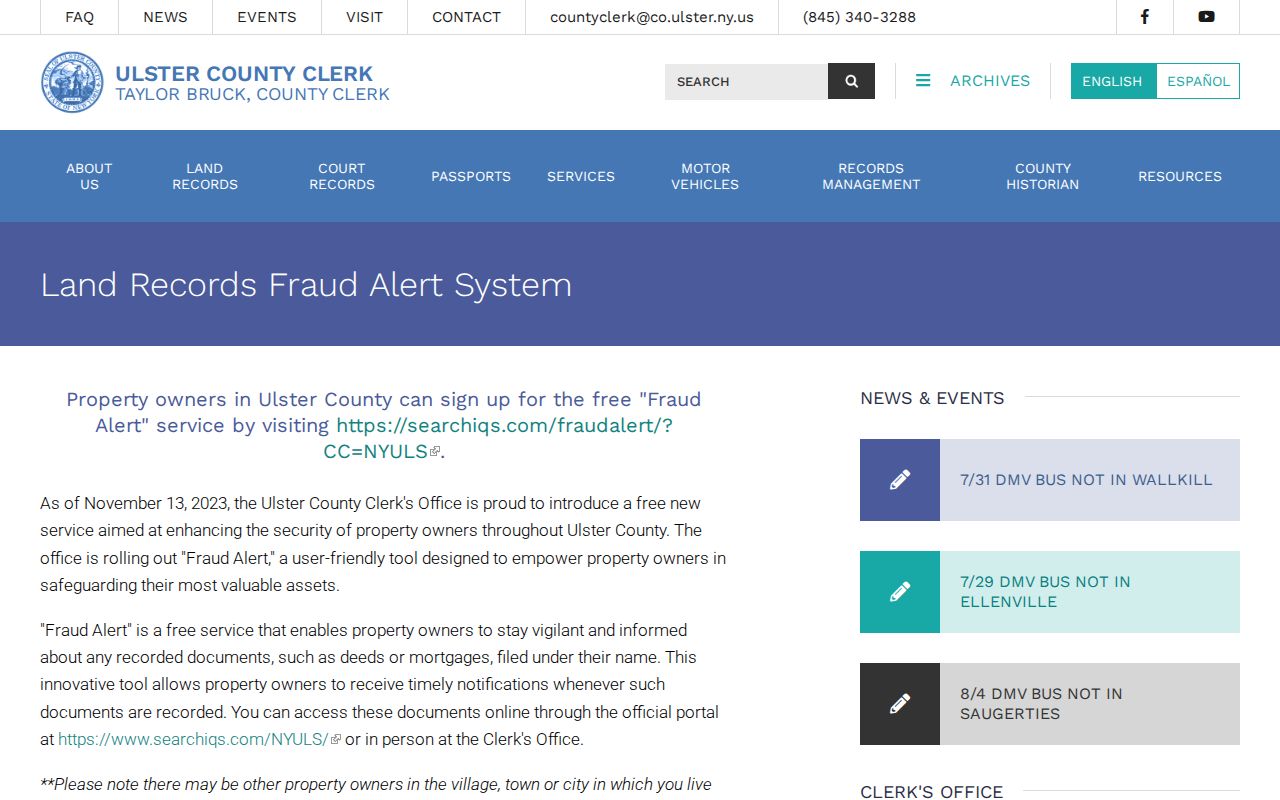
The county notice separates the free official service from private mailers charging for deed-related products.
Ulster County Deed Records Across the 1950 Divide
The Ulster County Clerk places land records from 1685 to the present. SearchIQS covers 1950 forward. INDEXBOOKS is the route for 1949 and earlier. Start with the parcel's deed book and page. Open the indexed instrument and name the grantor and grantee. Compare its legal description against the target land. For an older transfer, search the seller as grantor with Ignore Party Type. Then work backward transfer by transfer.
| Deed or instrument | What it does | Common research use |
|---|---|---|
| Warranty or bargain-and-sale deed | Records a conveyance | Names grantor, grantee, and described land |
| Quitclaim deed | Conveys the signer’s interest without the same covenants | Family, corrective, or interest transfer context |
| Executor or fiduciary deed | Records an estate-authorized transfer | Links the chain to Surrogate’s Court |
| Mortgage satisfaction | Records discharge of a filed mortgage | Follows the mortgage and assignment trail |
Book and page ruled before 2003; many later filings use an instrument number instead. Mortgage Books 1 through 344 remain the county guide's stated online gap, so the Records Room, Archives, or FamilySearch may be needed. The official SearchIQS entry shows guest and account access.
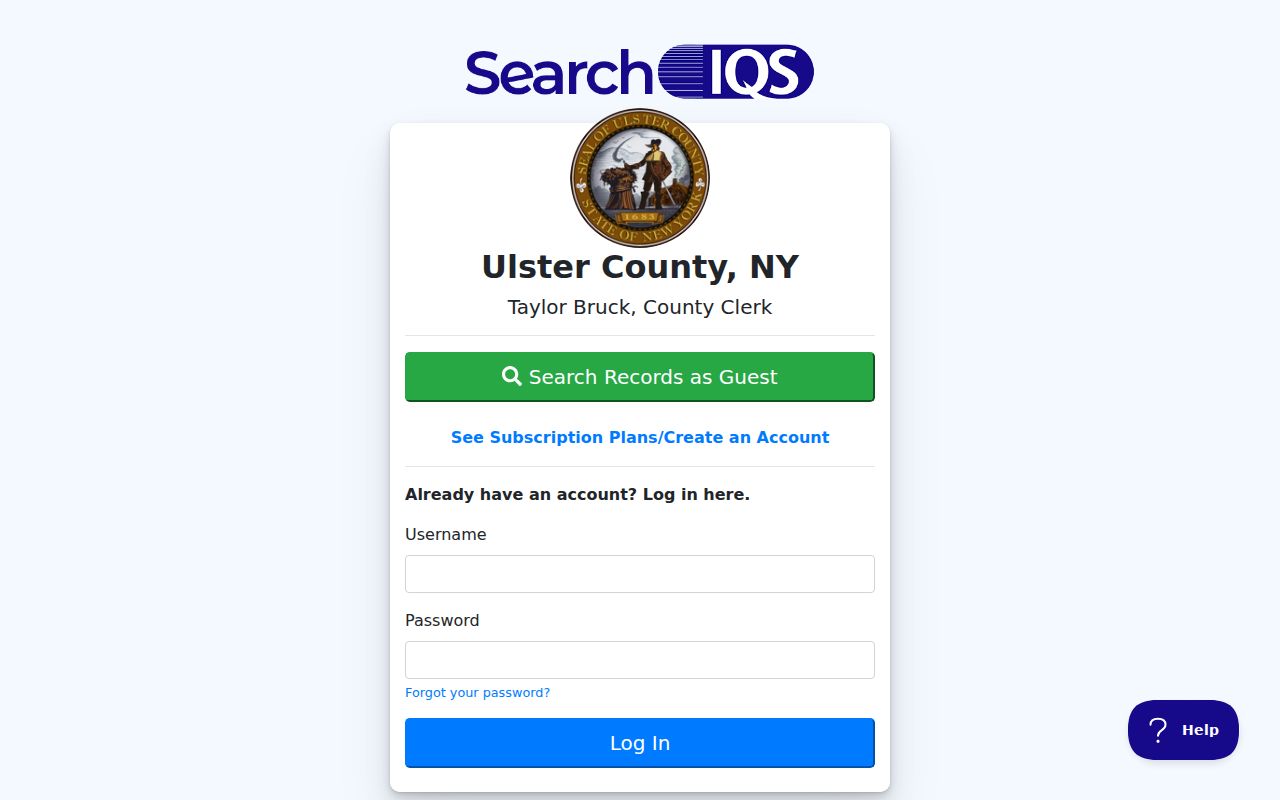
The county land-index portal points the way, but certified copies still come from the Clerk.
- Grantor
- The party conveying an interest.
- Grantee
- The party receiving the recorded interest.
- Chain of title
- The linked sequence of conveyances affecting the land.
- Instrument number
- A later filing identifier used alongside older book-and-page references.
Recorded Notices and Court Cross-References
A lis pendens can sit in the Clerk's land system. The foreclosure, partition, or quiet-title case behind it lives in WebCivil Supreme. Save both references. The recording reference documents notice against the land. The court index number documents the litigation itself. A filed notice never tells you the outcome. Check the docket status. Then obtain the judgment, withdrawal, satisfaction, referee's deed, or certified filing from the responsible clerk.
Plain copies, prepared copies, certified copies, and portal images follow different fee routes. Verify the current Clerk schedule before paying. Identify the exact instrument rather than asking staff to research a broad title question.
The official WebCivil Local search shows the court-index route that may run alongside a recorded notice.
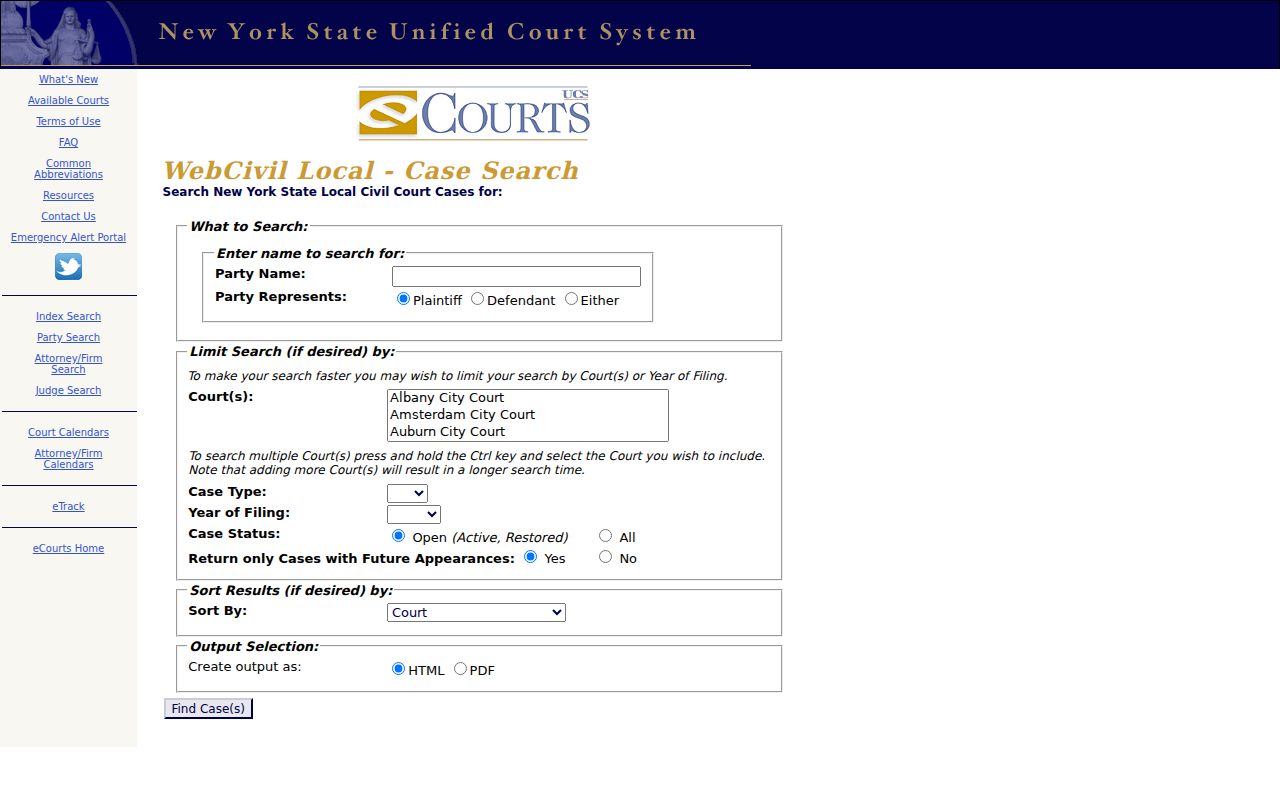
The court screen yields identifiers you can match against a County Clerk land filing.
For a mail or counter request, give the recorded party and document type. Include the filing date plus the book/page or instrument number. Ask whether the copy must be plain or certified before you pay. Keep the cover page with the deed. Indexing, recording stamps, and later references can matter as much as the conveyance text. When a legal description cites an earlier instrument, copy that reference before moving down the chain.