
What Ulster County Property Tax Records Show
Each Ulster County office records a different event on its own clock. The assessor posts the roll. The recorder files the deed. The collector tracks the tax bill, and each entry carries its own reference. Read them together. Hang on to the parcel identity and municipality. Keep the source date and recorded reference too. Tie every result to the right property with them.
| Field | What It Shows | Where |
|---|---|---|
| Assessed value | Kingston | Kingston |
| Market / appraised value | Kingston | Kingston |
| Exemptions | Kingston | Kingston |
| Tax bill & status | Kingston | Kingston |
| Taxing districts | Kingston | Kingston |
A single Ulster County tax record only tells part of the story. The assessor updates the assessment roll. The recorder indexes the deed, and each collector runs its own ledger for the tax bill. Updates land on different schedules. That is why every result should travel with its parcel identity, municipality, source date, and recorded reference attached.
Looking Up a Ulster County Tax Bill
Each Ulster County office records a different event. The assessor sets the parcel value, while the tax roll carries the bill. Updates land on separate schedules. Keep the parcel number, municipality, and source date with every figure, and compare deed records against the tax data before trusting either alone.
- Follow the named official source, save its record identifier, and compare the result with the next custodian in the record chain. by address or parcel]
- Follow the named official source, save its record identifier, and compare the result with the next custodian in the record chain.
- Follow the named official source, save its record identifier, and compare the result with the next custodian in the record chain.
- Follow the named official source, save its record identifier, and compare the result with the next custodian in the record chain.
- Assessed value
- Kingston
- Mill rate / levy
- Kingston
- Homestead exemption
- Kingston
- Tax lien
- Kingston
Appealing a Ulster County Assessment
An Ulster County appeal lives or dies on matching numbers. Your assessor parcel, the tax roll entry, and any appraisal must all describe the same property. Note the source date of each. Offices update on their own schedules. So bring the parcel number and the latest recorded reference when you contest the assessment.
Appeal window. Confirm the current grievance calendar with the local assessor. Missing the applicable filing date can postpone review until the next cycle.
Read Ulster County Property Tax Records by Custodian
An assessment roll and a tax bill are not the same document. The local assessor builds the roll entry. Ulster County RPTSA backs assessment and tax-map work behind the scenes. Who collects depends on the levy. Kingston City handles its own delinquent city taxes instead of routing them to County Finance. Town, village, school, and county schedules can therefore send you to different counters. So identify the custodian before you draw any conclusion from a single record.
| Field | What it shows | Where to verify |
|---|---|---|
| Current Owners Name | Assessed owner on the dated roll | Municipal final roll |
| Land and Total | Components of assessed value | Roll or assessment system |
| Exemption and taxable value | Adjustment applied for that levy | Roll and assessor |
| Bill and payment status | Amount levied, paid, or delinquent | Responsible collector |
The 2025 Kingston final roll carries SWIS 510800, a valuation date of July 1, 2024, and a taxable status date of March 1, 2025. It applies a 47 percent uniform value. Those facts describe the Kingston roll only, not the whole county. Tentative and final roll pages typically appear around May 10 and July 10 under the county schedule. The county assessment-roll page links the municipal rolls for each jurisdiction.
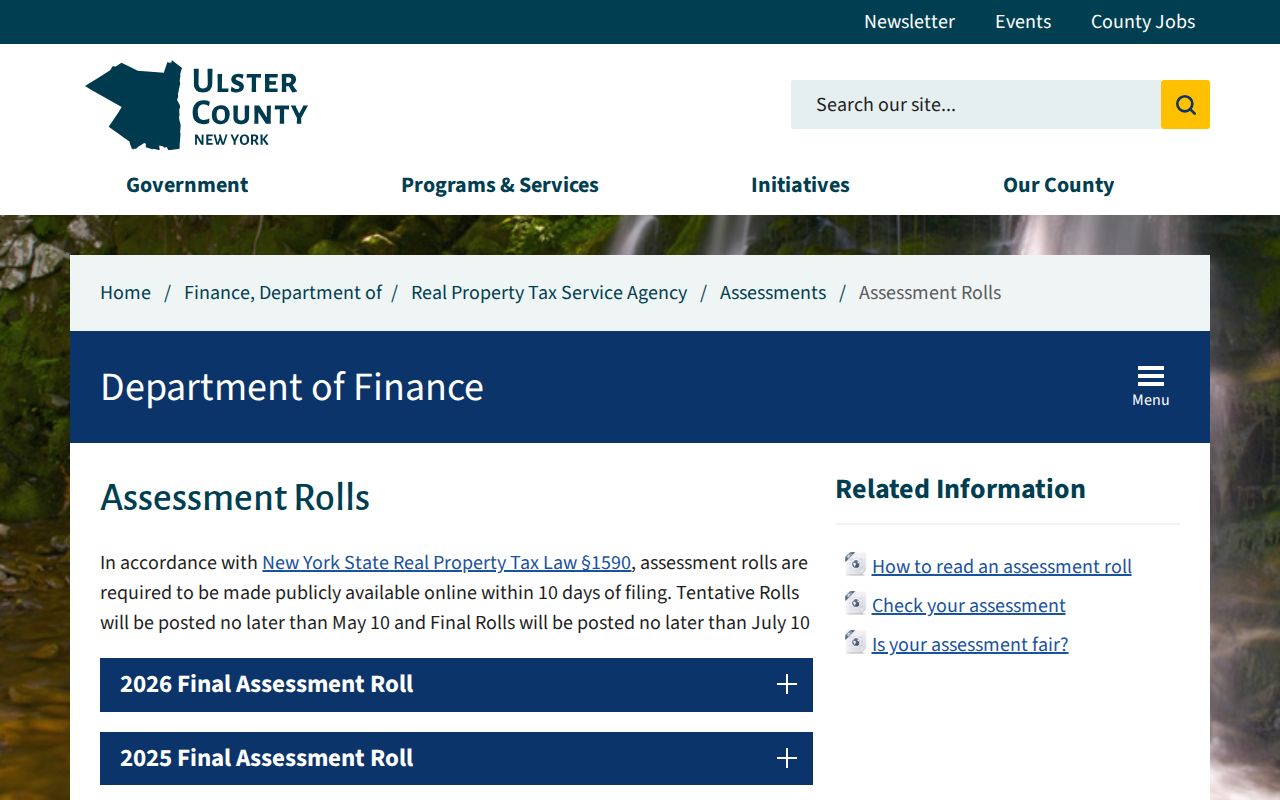
The page is the stable starting point when a dynamic property portal is changing.
Deadline check. Assessment review and tax-map correction are separate processes; confirm the current grievance date and required evidence with the local assessor.
Ulster County Delinquency and Foreclosure Records
County Finance lays out the tax, foreclosure, and auction procedures, but who actually collects shifts with the municipality and the levy. A delinquent notice is not a completed transfer. A scheduled auction is not a deed. Before concluding anything, confirm the redemption status, the notice date, the collector, the parcel identity, and the final recorded instrument. The official Finance page supplies the county route.
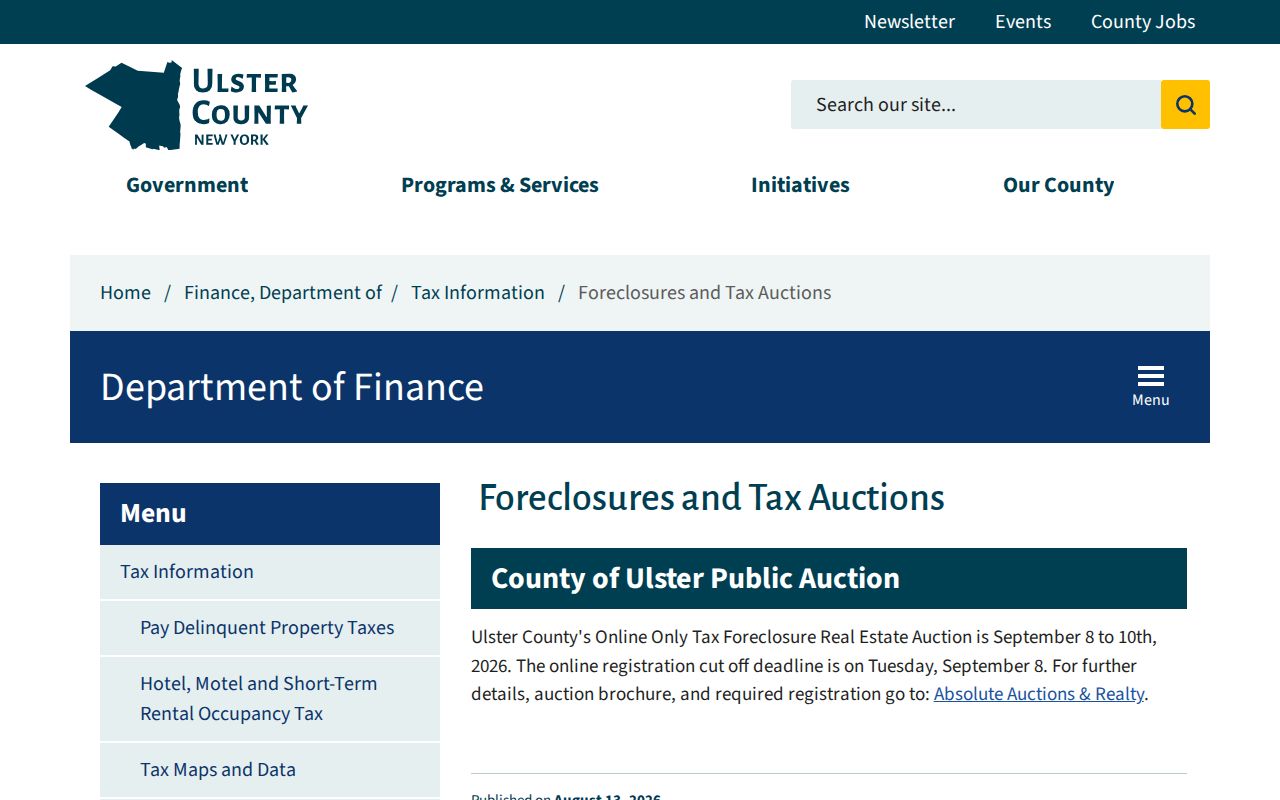
The county notice page supplies the official payment context. No individual Kingston bill screen is open to the public. Under the county instructions, payments covering multiple delinquent years apply in reverse chronological order. This means the oldest year is paid first. Installment and card-payment rules can change. Verify them against the current account rather than inferring anything from an older notice.
Keep the envelope and the receipt. Keep the parcel number, the tax year, and collector confirmation for any payment dispute. The roll proves assessment data. The collector's ledger proves billing and payment status. Exemptions only mean something in the context of the named levy and status date. STAR generally concerns school tax on a qualifying primary residence. So it should not be assumed for vacant, commercial, investment, or second-home property just because another exemption code shows up. Ask the assessor for the code definition and the application record. A tax-map correction differs from an assessment grievance as well. The correction route fixes mapped parcel information with deed and survey evidence. A grievance challenges the valuation through the applicable review calendar. Either way, save the form, submission date, evidence list, and written determination.