
Tracing Former Owners of a Ulster County Property
No single office tells the whole story of a Ulster County parcel. The clerk records the deed. The assessor lists the owner of record. Each town updates its tax roll on its own schedule. Read the sources together. Note the parcel number, the municipality, the source date, and the recorded reference with every result so the deed chain stays straight.
| Source | Years It Covers | Where Held | What It Shows |
|---|---|---|---|
| Kingston | Kingston | Kingston | Kingston |
| Kingston | Kingston | Kingston | Kingston |
| Kingston | Kingston | Kingston | Kingston |
| Kingston | Kingston | Kingston | Kingston |
Ulster County official sources should be read together because each office records a different event and updates on its own schedule. Keep the parcel identity, municipality, source date, and recorded reference with every result.
Walking the Ulster County Deed Chain Backward
Walking a Ulster County deed chain backward means stepping from deed to deed. Start with the newest recorded deed. Pull its liber and page reference. Then find the prior owner named as grantor. Repeat through the deed records until the trail thins. Along the way, keep the parcel number, municipality, source date, and recorded reference attached to each step. That way nothing gets confused.
- Follow the named official source, save its record identifier, and compare the result with the next custodian in the record chain.
- Follow the named official source, save its record identifier, and compare the result with the next custodian in the record chain.
- Follow the named official source, save its record identifier, and compare the result with the next custodian in the record chain.
- Follow the named official source, save its record identifier, and compare the result with the next custodian in the record chain.
- Grantor / grantee
- Kingston
- Chain of title
- Kingston
- Legal description
- Kingston
How Far Back Ulster County Ownership Records Go
Ulster County official sources should be read together because each office records a different event and updates on its own schedule. Keep the parcel identity, municipality, source date, and recorded reference with every result.
Lawful use. Kingston
Trace Former Ulster County Owners Backward
Begin with the current deed for the Ulster County parcel. Record its grantor. Then search that grantor's name to find the deed by which they acquired the property. Repeat the same step with each earlier grantor, working backward owner by owner. Compare the municipality and the legal description every single time. A shared surname can surface unrelated deeds. The parcel number is your safeguard against grabbing the wrong one.
| Transfer date | Grantor to grantee | Deed type | Book and page |
|---|---|---|---|
| Newest recorded date | Present seller to present grantee | As indexed | Current reference |
| Prior acquisition date | Earlier seller to later grantor | As indexed | Prior reference |
| Pre-1950 entry | Read from grantor or grantee index | Older deed book | INDEXBOOKS reference |
The SearchIQS main search covers deeds from 1950 forward. Ulster land records go back much further, to 1685. For anything from 1949 or earlier, open the proper INDEXBOOKS volume. Then search the first three letters of the surname. Use the blue arrows to move through pages. Copy the book and page numbers cited in the entry. The county guide notes one quirk. Quotation marks in an index entry point to the book listed above. Mortgage Books 1 through 344 are not online in that guidance.
When a date goes missing, other sources can narrow it. County Finance holds tax-roll microfilm back to 1849. Archives, FamilySearch, old maps, and newspapers all help bracket a gap. Probate transfers raise a separate issue. A deed may name an executor or administrator as grantor without explaining the appointment. The WebSurrogate system may be needed to see who authorized the sale.
- Reverse index
- An index arranged to help find a party on the opposite side of a conveyance.
- Chain of title
- The linked sequence of transfers for the same land.
- Quitclaim
- A conveyance of the signer's interest without the same covenants as other deed forms.
When Probate Interrupts the Owner Chain
Sometimes the grantor is an executor, administrator, or another fiduciary, even though the prior assessed owner was a living individual. That is the probate interrupting the owner chain. Search the decedent's name or the estate in WebSurrogate and save the file number. Review the appointment, the will, the decree, or the order that establishes the fiduciary's authority. Ulster Surrogate's Court holds estate material from 1787 to the present. Older files reach researchers through microfilm, microfiche, and public viewing machines. The WebSurrogate portal supports name, file, and index searches.
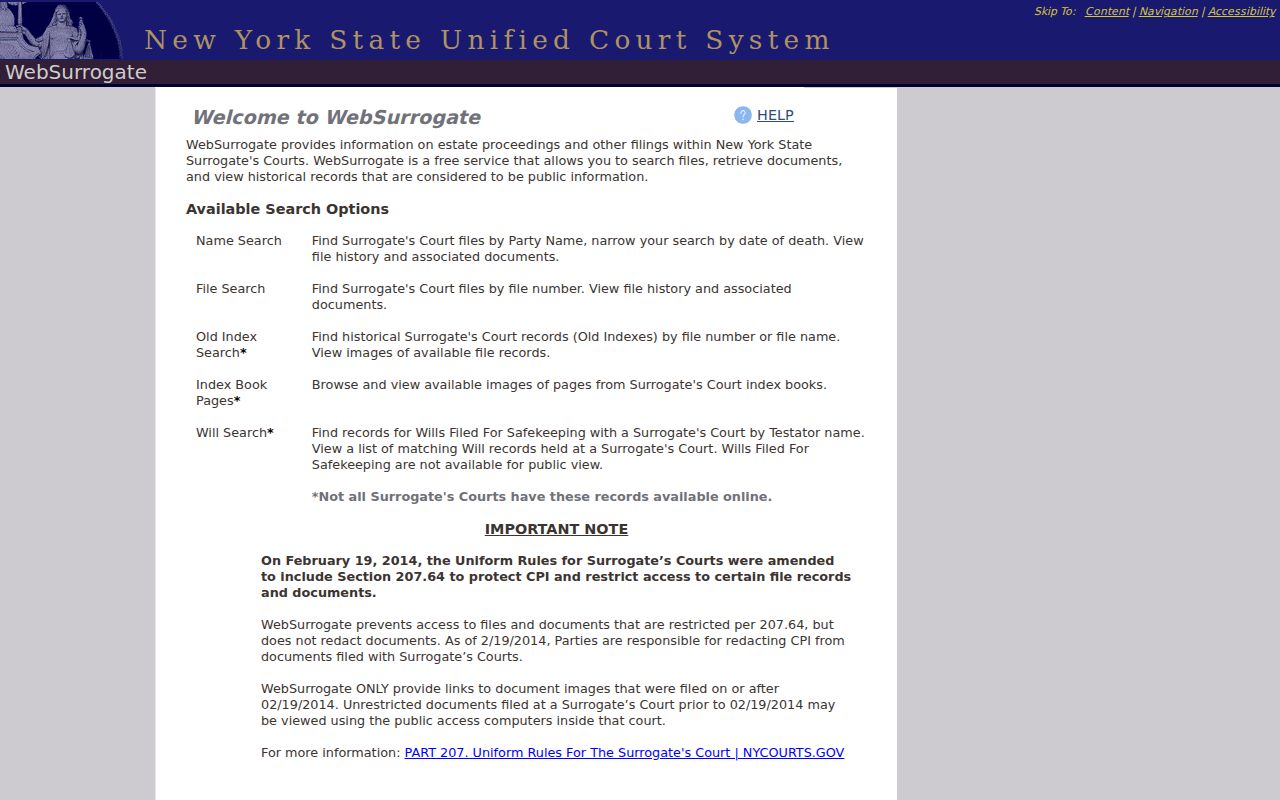
The court search explains estate authority that a deed-index line alone may not reveal.